
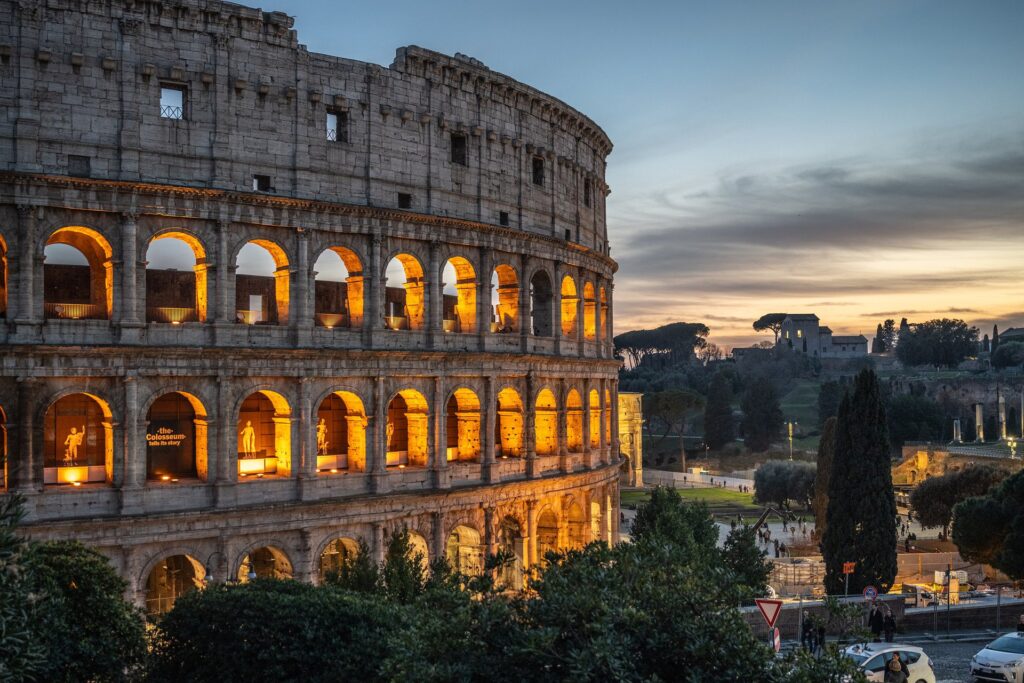
Rome layers three millennia of architecture onto an ordinary, working city: a Baroque fountain sits opposite a corner espresso bar, and a metro escalator surfaces beside a second-century temple wall. Trying to race through every monument in forty-eight hours leaves most visitors exhausted. The city rewards picking one historic quarter per morning, keeping midday slow, and walking back across the river after sunset.
In short: Base yourself near Monti, Centro Storico or Prati so most major sights sit within a 20-minute walk, book timed tickets for the Colosseum and Vatican Museums weeks ahead on official portals, and travel between April–May or late September–October. Take the Leonardo Express train from Fiumicino Airport to Roma Termini in 32 minutes.
Where to stay
Centro Storico and Campo de’ Fiori put you within walking distance of the Pantheon, Piazza Navona and Trastevere across the Tiber, with cobblestone lanes and late-evening cafés. Streets are atmospheric rather than silent, so look for courtyard rooms if you sleep lightly.
Monti, tucked between Roma Termini and the Colosseum, feels like a neighbourhood village with independent boutiques, wine bars and quick Metro Line B connections. Prati, just north of the Vatican, offers wider 19th-century avenues, calmer evenings and reliable Metro Line A access, while Testaccio gives repeat visitors a residential, food-focused base.
What is worth your time
The Colosseum, Roman Forum and Palatine Hill
All three sites form one combined archaeological zone. Entering via the Palatine Hill or Roman Forum side often moves faster than the main Colosseum piazza security line, though your Colosseum arena slot remains strictly timed. Bring sun protection and water: shade across the Forum ruins is limited, and the walk up Palatine Hill rewards you with sweeping views over Circus Maximus.
Vatican Museums, Sistine Chapel and St. Peter’s Basilica
The Vatican Museums house kilometres of galleries culminating in the Sistine Chapel. Reserve the earliest morning slot you can find on the official museum website to avoid midday bottlenecks in the Raphael Rooms. St. Peter’s Basilica itself is free to enter, though security queues stretch across the square after 9 am; arrive shortly after opening at 7 am or late afternoon, and note the strict dress code covering shoulders and knees.
Pantheon, Borghese Gallery and Piazza Navona
The Pantheon now requires an entry ticket for visitors, yet seeing the unreinforced concrete dome and open oculus in person remains essential. If you love sculpture and Caravaggio, reserve the strictly capped two-hour slots at the Borghese Gallery inside Villa Borghese gardens well in advance.
Trastevere and the Aventine Hill
Cross Ponte Sisto before dusk into Trastevere’s ivy-covered alleys, then climb the quieter Aventine Hill the next morning for the Orange Garden overlook and the famous keyhole view through the Knights of Malta gate toward St. Peter’s dome.
Eating and drinking
Roman cooking centres on a handful of classic pastas—cacio e pepe, carbonara, gricia and amatriciana—alongside crisp fried artichokes in spring and thin Roman-style pizza al taglio sold by weight for quick lunches. For neighbourhood dining, Testaccio, Monti and backstreet Trastevere outperform restaurants directly facing Piazza Navona or the Pantheon. Stand at a neighbourhood coffee bar for espresso and a pastry before 10 am, where prices are a fraction of table service.
Getting around
Rome’s historic core is best explored on foot, supplemented by Metro Lines A and B, surface trams (such as Tram 8 into Trastevere) and buses. Tap-and-go contactless bank cards work directly at metro ticket gates and onboard yellow/red validators, making single tickets effortless. From Fiumicino Airport (FCO), the non-stop Leonardo Express train reaches Roma Termini in 32 minutes; regional FL1 trains serve Trastevere, Ostiense and Tiburtina for less.
When to go
Spring (April to May) and autumn (late September to October) bring daytime temperatures around 18–24 °C and long evenings. July and August are fiercely hot, crowded and see some family-run shops close around Ferragosto in mid-August. Winter (November to February) is mild by northern European standards and noticeably calmer inside museums.
Day trips
- Ostia Antica – 35 minutes by suburban train from Porta San Paolo; Rome’s ancient port preserves intact brick streets, mosaics and an amphitheatre with a fraction of Pompeii’s crowds.
- Tivoli (Villa d’Este and Hadrian’s Villa) – about an hour east by regional train or bus for Renaissance terraced fountains and an imperial country estate.
- Orvieto – roughly 70 minutes north on regional trains from Termini to a hilltop Umbrian town famed for its striped cathedral and cliffside cellars.
Good to know
- Carry a refillable bottle: Rome’s cast-iron nasoni street fountains dispense cold, safe municipal drinking water all over the city.
- Restaurant bills often include a small coperto (cover charge per person for bread/table setting); tipping is modest and rounded up rather than 20%.
- Keep an eye on personal belongings on crowded Metro lines and buses around Termini, and ignore unofficial ticket sellers outside the Colosseum or Vatican.
Frequently asked questions
How far in advance should you book the Colosseum and Vatican Museums?
Book timed-entry tickets directly on the official websites as soon as your travel dates are fixed, ideally three to four weeks ahead between April and October. Official Colosseum tickets release in staggered batches and sell out quickly in peak months.
Do you need a car in Rome?
No. Historic Rome is compact and walkable, with restricted traffic zones (ZTL) across the centre that automatically fine non-resident cars. Use the Metro, trams, buses and regional trains from Termini or Tiburtina stations.
When is the best time to visit Rome?
April to May and late September to October offer warm, pleasant weather for walking without peak July and August heat. November through February brings shorter queues and lower hotel rates, though winter rain is possible.
Official websites
Opening hours, timed-entry slots and transit fares change periodically, so verify directly before you go:
- Turismo Roma – Official Tourism Portal
- Parco Archeologico del Colosseo – Official Ticketing
- Vatican Museums & Sistine Chapel
- Roma Pass – Museums & Public Transport
- Trenitalia – Leonardo Express & Regional Rail
Featured photo: Wilfredor, CC0, via Wikimedia Commons.

Leave a Reply