
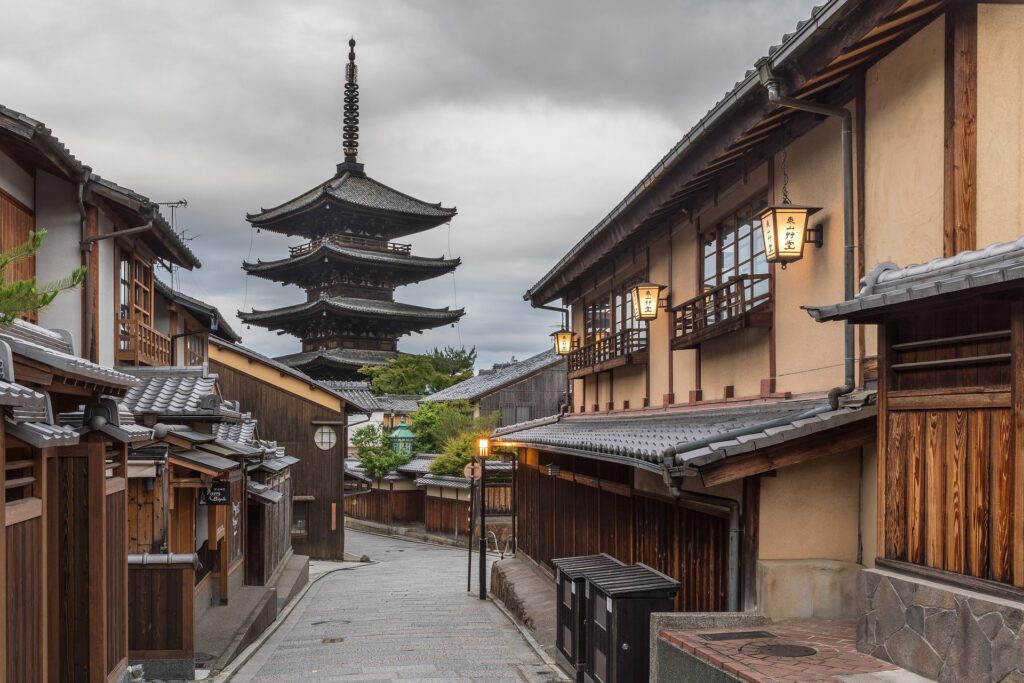
Kyoto holds more than sixteen hundred Buddhist temples, centuries-old Shinto shrines and timber merchant streets framed by wooded mountains on three sides. Because its most famous sights sit near the city’s outer edges while peak midday tour groups pack the narrow lanes, Kyoto rewards an early-bird schedule more than almost any other destination. Walk a stone lane at dawn, step into a quiet Zen garden by mid-morning, and save shopping arcades and riverside dinners for evening.
In short: Base yourself around Kawaramachi/Karasuma for dining and walking, or near Kyoto Station for easy rail access; arrive at flagship shrines before 7:30 am; and prioritize subways, trains and walking over congested city buses. Visit in March–April or mid-November for peak blooms/foliage, or January–February for tranquil temple grounds.
Where to stay
Nakagyo (Kawaramachi and Karasuma) is the smartest central base: you sit beside Nishiki Market, covered shopping arcades, two subway lines and an easy 15-minute walk across the Kamo River into Gion. Higashiyama / Gion puts you right at the foot of historic wooden lanes and temples, though evenings turn very quiet and rates run higher.
Kyoto Station area lacks traditional street charm yet shines for convenience if you are arriving late by Shinkansen or planning daily rail trips to Nara, Uji and Osaka.
What is worth your time
Higashiyama, Kiyomizu-dera and Yasaka Pagoda
Kiyomizu-dera opens early at 6 am, letting you watch morning light over its massive wooden terrace before walking gently downhill through Sannenzaka, Ninenzaka and Yasaka-dori toward Maruyama Park and Gion. Notice how smaller neighbourhood sub-temples off the main route remain serene even at noon.
Fushimi Inari Taisha
Thousands of vermilion torii gates wind up forested Mount Inari, open continuously without entry fees. Most tour crowds stop at the lower loop after twenty minutes; continue higher up the stone trail for quiet woodland shrines, bamboo patches and sweeping views over southern Kyoto.
Arashiyama and Saga-Toriimoto
Go straight to the bamboo grove at dawn or pair it with lesser-visited gardens such as Okochi Sanso Villa, Tenryu-ji’s morning landscape pond, and the preserved thatched-roof lane of Saga-Toriimoto further north along the mountain base.
Northern temples and Philosopher’s Path
Kinkaku-ji (the Golden Pavilion) gleams across its mirror pond, while nearby Ryoan-ji offers a contemplative rock garden. On the eastern side, strolling the canal-side Philosopher’s Path between Ginkaku-ji (Silver Pavilion) and Nanzen-ji weaves past neighbourhood cafés and stone aqueducts.
Eating and drinking
Kyoto cuisine highlights seasonal vegetables, delicate broth-based tofu dishes (yudofu), matcha sweets from nearby Uji, and refined multi-course kaiseki alongside casual soba, udon and izakayas tucked down lantern-lit Pontocho Alley. Browse Nishiki Market mid-morning for pickled vegetables, skewers and sesame treats—just step aside into designated eating corners rather than eating while walking through the narrow arcade.
Getting around
Kyoto’s trains (JR lines, Keihan, Hankyu and the two Karasuma/Tozai subway lines) plus a pair of comfortable walking shoes bypass the city’s biggest headache: slow, packed tourist buses stuck in traffic. Rent a bicycle for flat central streets and riverside paths along the Kamo River, checking municipal bike-parking rules before locking up. Use your Suica/PASMO/ICOCA card everywhere.
When to go
Mid-to-late November brings fiery autumn maples across temple gardens, and late March to early April brings cherry blossoms—both require booking rooms months ahead. May and October offer lovely weather with slightly lighter crowds. Summer (July–August) is hot and humid, though festive during July’s Gion Matsuri, while winter is crisp and deeply peaceful.
Day trips
- Nara – 45 minutes south by JR or Kintetsu express train for Todai-ji’s colossal bronze Buddha and tame sacred deer roaming Nara Park.
- Uji – 20 minutes south on the JR Nara Line for historic green-tea houses and UNESCO-listed Byodoin Phoenix Hall.
- Osaka – just 15–30 minutes away by bullet train or Special Rapid rail for castle grounds and street food in Dotonbori.
Good to know
- Respect Gion’s private side streets: Kyoto enforces strict bans against photographing maiko/geiko without permission and against entering marked private alleys.
- Major shrines such as Saiho-ji (Moss Temple) and Katsura Imperial Villa require advance reservations weeks ahead.
- Carry small coins for temple entry boxes (typically 400–600 yen) and remember you will remove shoes inside wooden temple halls—wear clean, easy-to-slip-on footwear.
Frequently asked questions
How early should you visit Fushimi Inari and Arashiyama to avoid crowds?
Arrive at Fushimi Inari Taisha or the Arashiyama Bamboo Grove before 7:30 am. Both sites are open 24 hours, whereas buses and day-tour groups flood the entrances between 9:30 am and 4:00 pm.
How do you get from Tokyo or Osaka to Kyoto?
The Tokaido Shinkansen bullet train runs from Tokyo Station to Kyoto Station in about 2 hours 15 minutes. From Osaka or Kansai International Airport (KIX), JR Haruka Limited Express and Special Rapid trains reach Kyoto in 30–75 minutes.
How many days do you need in Kyoto?
Three full days lets you cover Higashiyama, Fushimi Inari, Arashiyama and northern Kyoto without rushing, with a fourth day for a morning trip to Nara or Uji.
Official websites
Check seasonal night-illuminations, temple admission rules and rail routes on official sites:
- Kyoto City Official Travel Guide
- JR-West – Regional & Airport Rail
- Kiyomizu-dera Temple
- Fushimi Inari Taisha
Featured photo: Basile Morin, CC BY-SA 4.0, via Wikimedia Commons.

Leave a Reply