
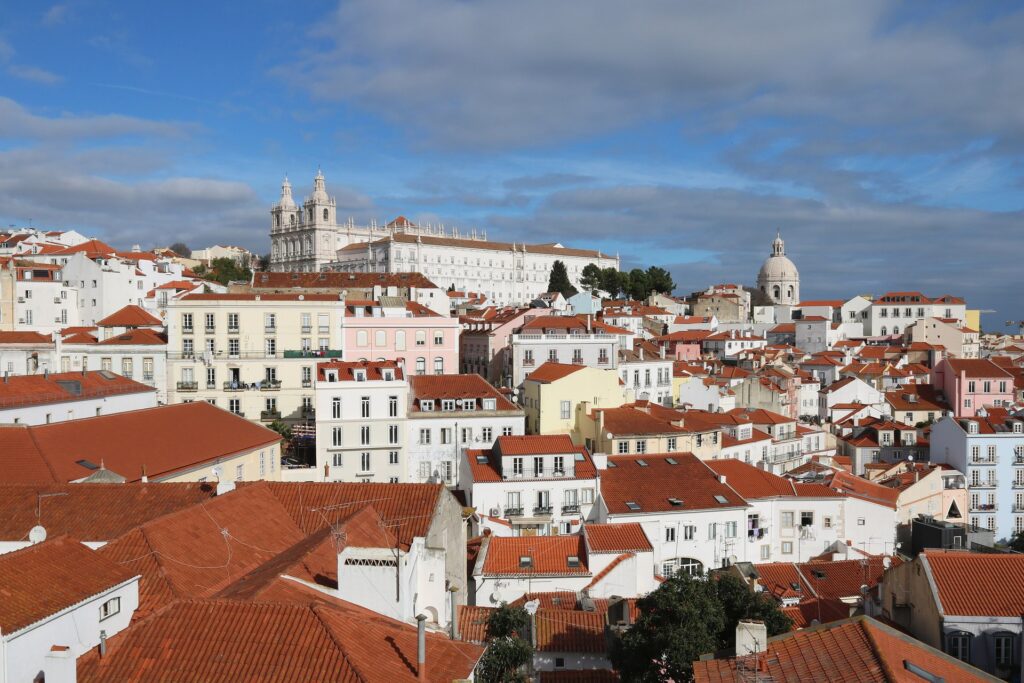
Lisbon catches Atlantic light on pastel facades, patterned azulejo tiles and terracotta roofs tumbling toward the broad Tagus River. Because the city rises and dips across seven hills, almost every steep lane ends at a tiled terrace, a clattering yellow tram or a sudden glimpse of water. Slow down for a coffee at a miradouro and let the hills set your pace.
In short: Stay in Baixa, Chiado or Príncipe Real for easy flat and hillside access, use a Navegante transit card or contactless bank card across Metro, buses and trams, and visit in April–June or September–October for bright skies without peak-summer queues. The Metro Red Line reaches central Lisbon from the airport in around 25 minutes.
Where to stay
Baixa and Rossio form the flat grid between the riverfront and Rossio Square, making them the easiest base if you want level streets and fast links to metro lines and Sintra trains. Chiado and Carmo sit just uphill with classic cafés, theatres and quick access into lively Bairro Alto.
For a quieter, design-forward neighbourhood filled with independent shops and tree-shaded plazas, choose Príncipe Real. Staying inside Alfama surrounds you with medieval lanes and Fado houses, though expect steeper walks and taxis dropping off on wider perimeter streets.
What is worth your time
Alfama, São Jorge Castle and the Miradouros
Start at the top near São Jorge Castle or Miradouro da Graça and wind downhill through Alfama’s narrow alleys past the tiled balconies of Santa Luzia and Portas do Sol. Walking down rather than climbing saves energy while keeping the best river views ahead of you.
Tram 28 vs. walking and neighbourhood trams
Historic Tram 28E links Martim Moniz to Campo Ourique via Alfama and Graça, drawing long queues by mid-morning. Ride before 8:30 am, catch it from a mid-route stop later in the afternoon, or ride the similarly scenic Tram 12E loop or modern Tram 15E west along the river. Watch pockets closely on any crowded tram.
Belém riverfront and Jerónimos Monastery
A 20-minute ride west by Tram 15E or train from Cais do Sodré brings you to Belém’s monumental Manueline landmarks: Jerónimos Monastery, the waterside Belém Tower and the Monument to the Discoveries. Book monastery tickets online beforehand and step into the nearby National Coach Museum or warm pastéis de nata bakery on the walk back.
LX Factory and Tagus ferries
For contemporary Lisbon, browse bookshops and rooftop cafés inside the converted industrial complex at LX Factory in Alcântara, or take a ten-minute public ferry from Cais do Sodré across to Cacilhas for grilled fish and skyline views back toward the 25 de Abril Bridge.
Eating and drinking
Fresh grilled sardines (best in summer), salted cod (bacalhau) prepared in hundreds of regional recipes, pork bifanas in crusty rolls, and warm custard tarts dusted with cinnamon define daily eating. Check out small tascas off main tourist drags in Mouraria, Graça and Santos, and remember that small appetiser plates (olives, cheese, bread) placed on restaurant tables are charged per item eaten—politely decline what you do not want.
Getting around
A rechargeable Navegante card (or contactless tap on newer Metro gates and Carris buses/trams) covers the Metro, Carris trams, buses, and steep funiculars like Elevador da Bica and da Glória. Beware of steep fares when paying cash onboard historic trams or elevators without a card or 24-hour pass. Suburban CP trains depart Rossio for Sintra and Cais do Sodré for Cascais.
When to go
May, June and September through October bring warm, sunny days around 21–26 °C and mild Atlantic breezes. June features lively street parties for Santo António in Alfama. July and August are bright and dry yet crowded on trams and in Sintra; November to March is quieter and crisp, though winter rain makes cobblestone slopes slick.
Day trips
- Sintra – 40 minutes by train from Rossio Station; misty wooded hills hold Pena Palace, Quinta da Regaleira and the Moorish Castle. Buy timed palace entry ahead and catch local bus 434 or hike up early.
- Cascais and Estoril – 40 minutes along the coastal train line from Cais do Sodré for beaches, a cliffside promenade to Boca do Inferno and seafood lunches.
- Évora – roughly 90 minutes by intercity train into Alentejo to see a Roman temple, whitewashed lanes and regional wine estates.
Good to know
- Lisbon’s white-and-black mosaic sidewalks (calçada portuguesa) become surprisingly slippery even in dry weather and especially after rain—pack grippy walking shoes.
- Many museums and municipal attractions close on Mondays; plan river walks or Sintra/Cascais on Monday instead.
- Tap water in Lisbon is safe and clean to drink.
Frequently asked questions
How do you get from Lisbon Airport to the city centre?
The Metro Red Line connects Lisbon Humberto Delgado Airport directly to the city network in about 20–25 minutes, transferring to the Green or Blue lines at Alameda or São Sebastião. Taxis and ride-hailing cars take 15–30 minutes depending on traffic.
How many days do you need in Lisbon?
Three full days gives you time for Alfama and Baixa, the Belém riverfront, neighbourhood viewpoints, and a half-day or full-day train trip out to Sintra or Cascais.
Is Lisbon easy to walk?
Lisbon is compact and richly walkable, though built on steep hills with polished limestone cobbles (calçada portuguesa). Wear rubber-soled shoes with grip, and use historic trams, metro lines or public elevators to spare uphill climbs.
Official websites
Check seasonal palace slots, transit passes and schedules on official portals before departure:
- Visit Portugal – Official Tourism Portal
- Metropolitano de Lisboa – Metro
- Carris – Trams, Buses & Funiculars
- Parques de Sintra – Palaces & Gardens
- CP – Comboios de Portugal Trains
Featured photo: Ingo Mehling, CC BY-SA 4.0, via Wikimedia Commons.

Leave a Reply